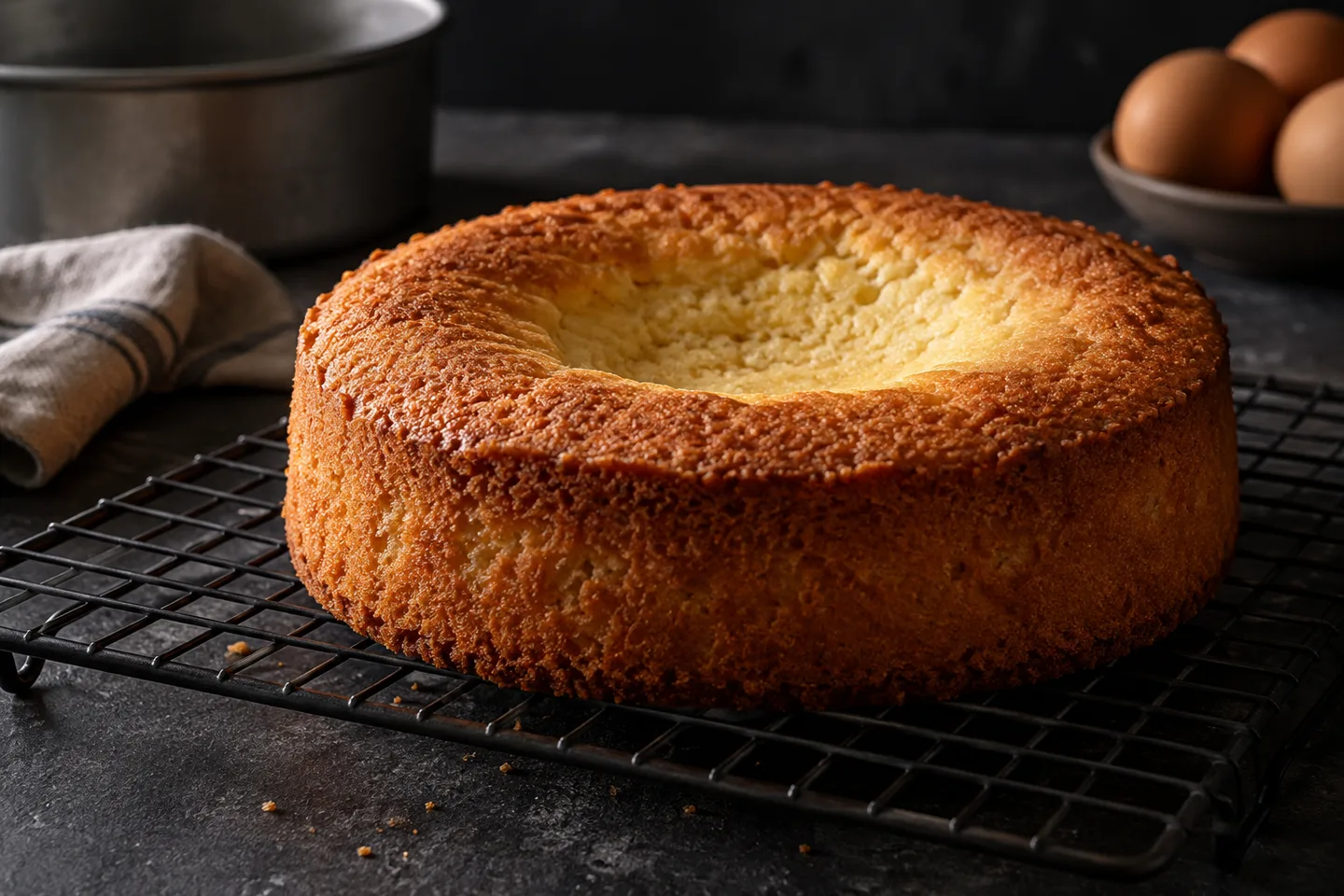
A cake sinks in the middle when its expanding batter is not strong enough to hold its height as it finishes baking and cools. The most common checks are an underbaked center, an incorrect amount of leavening, a changed pan, and an imbalance caused by measuring or substitutions. A dip is a symptom, not a diagnosis.
Start with the type of cake. A butter cake, a foam-based sponge and a cheesecake do not set in the same way. Some cakes settle normally, while a large crater in a cake intended to be level suggests that something needs attention.
Use the timing of the collapse as your first clue
If the cake swells dramatically and falls while still in the oven, look at leavening and the balance between expansion and setting. If it looks tall when removed and then sinks deeply as it cools, an unfinished center is worth checking. If only one side falls, pan placement, uneven heat or handling may matter.
Make notes before covering the evidence with frosting. Record whether you changed the pan, doubled the recipe, substituted an ingredient or altered the temperature. A familiar recipe in a new oven is not exactly the same baking setup.
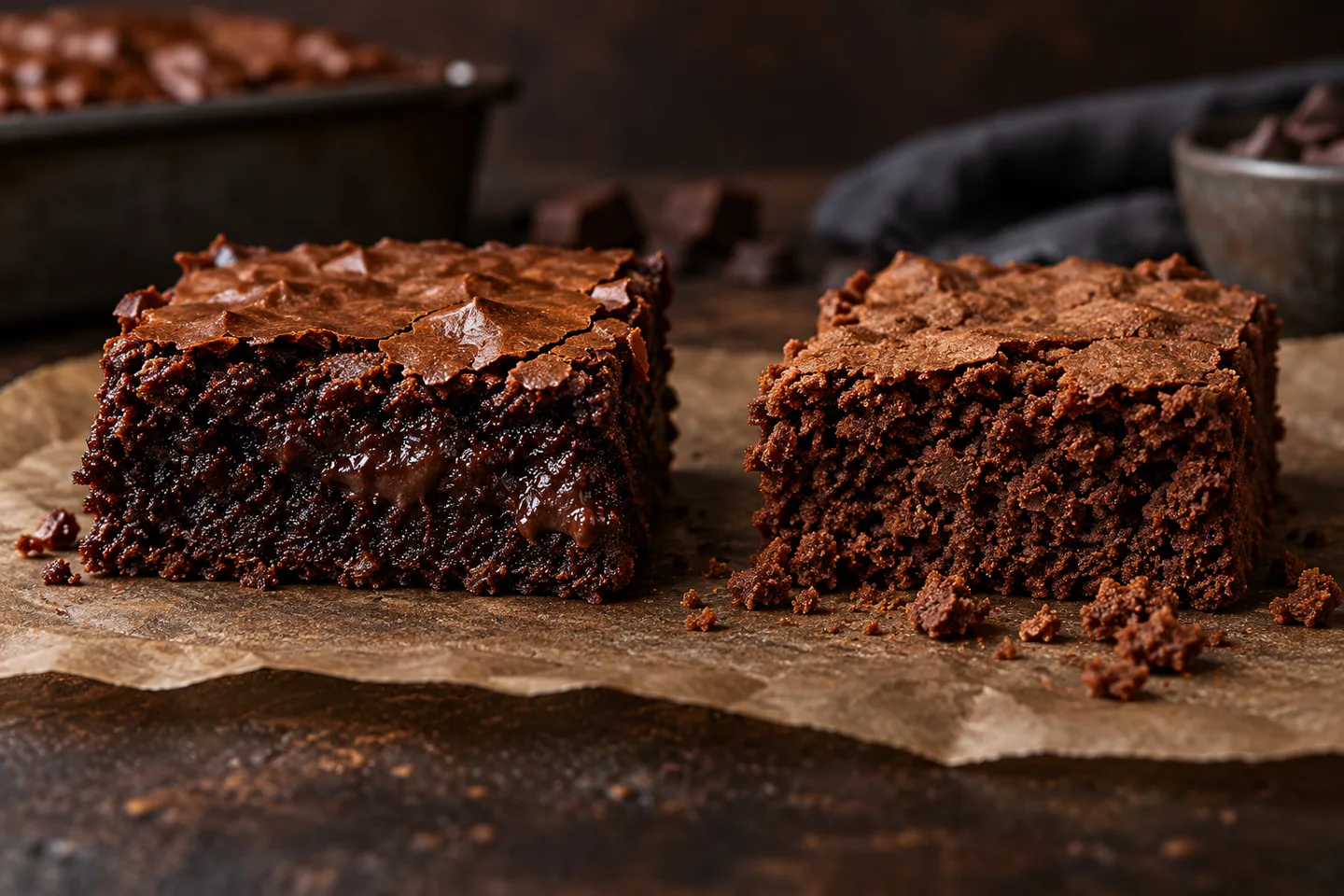
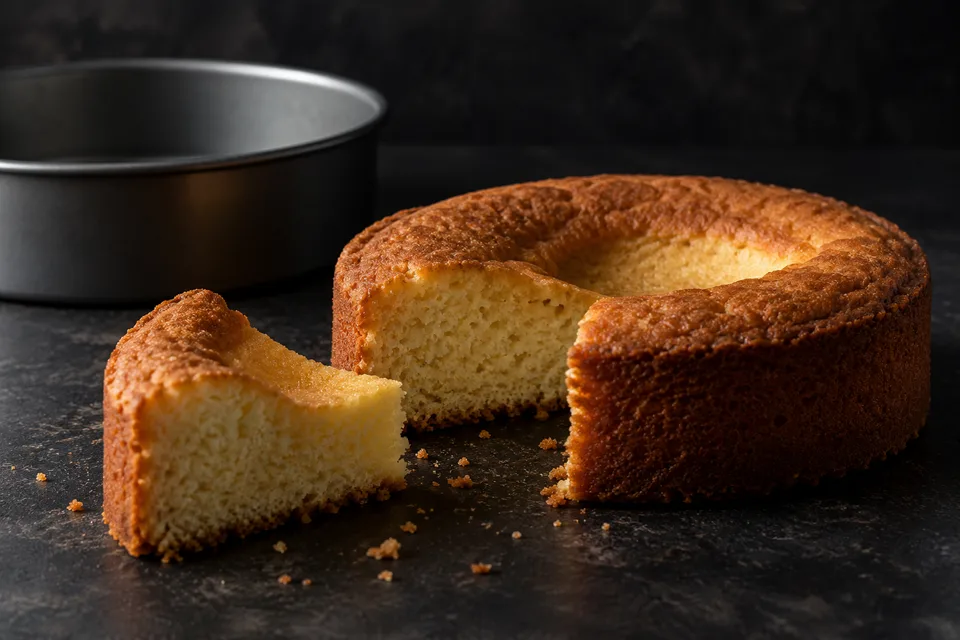
Let the cake cool as instructed before inspecting a cut face. A gummy or visibly wet center is different from a fully baked cake with a shallow dip. Do not assume a browned top means the interior was safely and completely baked.
Check the center before changing the formula
Check the center with more than one cue
The center is often the last part of an ordinary cake to finish. The edge can look ready while the middle still lacks structure. A cake removed at the earliest stated minute may need more time in your particular oven and pan.
Use the recipe's doneness cues together. These may include a set surface, an appropriate gentle spring-back, edges beginning to release, and a tester that matches the expected crumb. Fruit, chocolate pieces and a naturally moist cake can complicate a tester result.
King Arthur's cake-doneness guide recommends reading several signs rather than relying on just one. That principle is useful because an isolated clean spot on a skewer can be misleading.
Do not impose one temperature on every cake
A recipe may provide an internal-temperature range, but a universal finish number is not appropriate for butter cakes, cheesecakes, flourless cakes and egg-foam cakes alike. Use a temperature cue when it belongs to the recipe, not as a replacement for understanding the cake.
If the top is browning much faster than the center sets, check pan color, oven mode and rack position. A loose foil shield may protect the surface near the end, but it does not correct an unsuitable pan depth or a severely inaccurate oven.
Can a sunken cake be saved?
If the cake is completely baked, sound and only cosmetically uneven, you may be able to level it, serve slices, or use fully baked pieces in another dessert. A shallow dip can sometimes be accommodated by frosting, but first confirm the cake is actually done.
A wet, raw center should not be hidden under frosting. If you notice the problem immediately while baking is still in progress, returning the cake to the oven may allow further cooking, though the structure may not recover. A cooled cake with raw batter is not something to repair by decorating.
Do not taste raw batter to decide whether it is acceptable. Flour itself can carry pathogens as well as eggs. The FDA advises against eating raw flour, dough or batter.
Find what upset the rise-and-set balance
More leavening can make a cake less stable
Baking powder or baking soda produces gas, but the batter must support the expansion. Adding extra in the hope of a taller cake can create large, weak bubbles and a rise that the setting structure cannot sustain. A missing or inactive leavener more often produces insufficient lift, but it can still disrupt the expected result.
Measure small amounts carefully. Use actual measuring spoons, level them where the recipe expects a level measure, and check the label before adding the powder. A tablespoon substituted for a teaspoon is a major formulation error.
Baking soda and baking powder are not equal substitutes. Soda interacts with recipe acidity, while baking powder brings its own acidic ingredients. See when to use each leavener rather than trying to repair a collapsed cake with a casual swap.
Check self-rising flour and mix ingredients
If the recipe calls for plain flour, using self-rising flour adds ingredients the formula may not expect. Conversely, replacing self-rising flour with plain flour without the required adjustment can remove leavening and salt. Read the flour name and ingredient list.
Expired or poorly stored leaveners can also change performance. A package date and an activity check can inform your next batch, but adding a fresh dose to already mixed batter changes the formula and distribution. For a dependable cake, start with known ingredients.
The pan changes how quickly the center sets
A smaller pan makes the same batter deeper. The edges may set and brown while the center needs longer. A larger pan makes the batter shallower and usually changes baking time in the other direction. Neither conversion is solved by keeping the original timer unchanged.
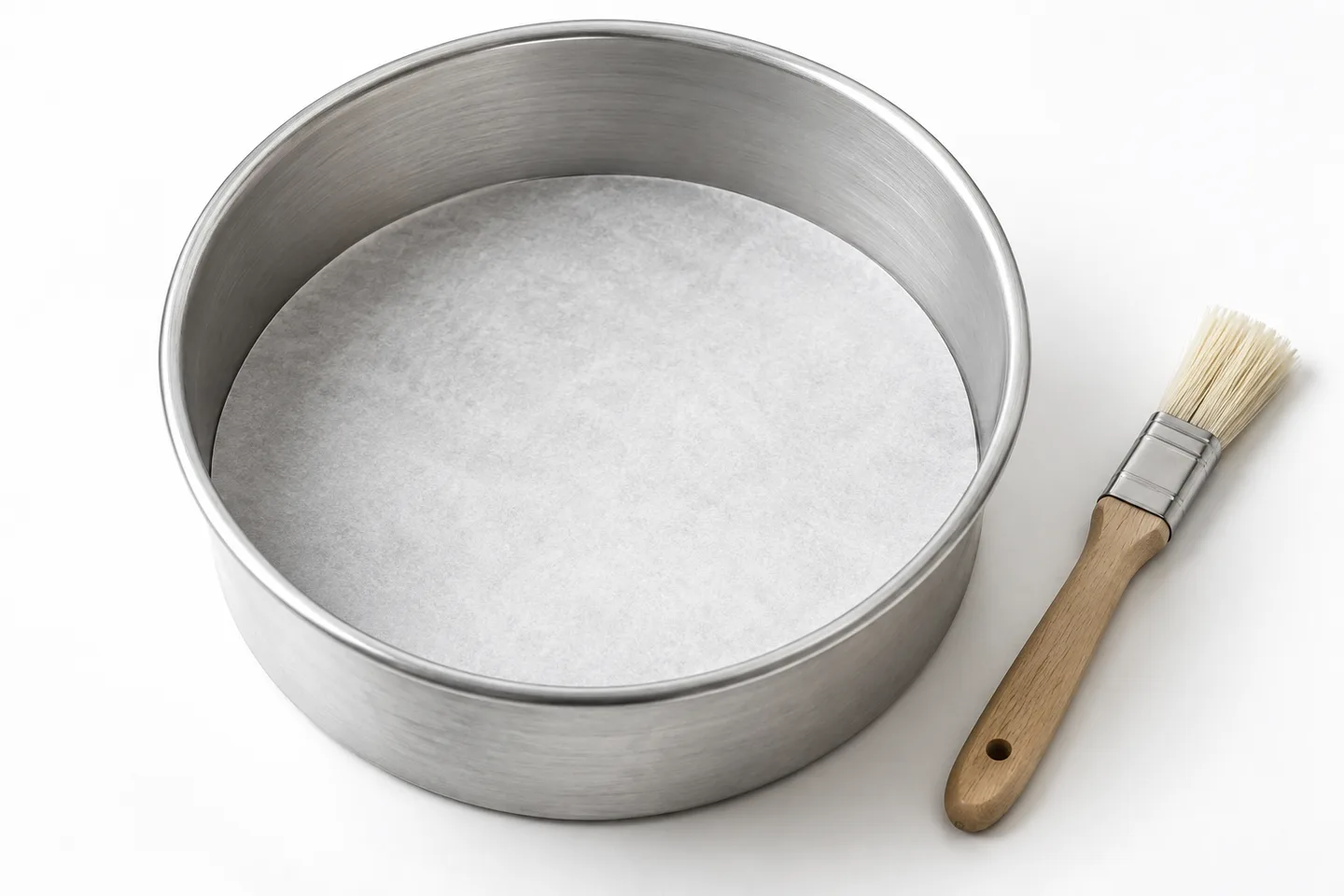
Measure inside the pan, not around its outer lip. A springform, a straight-sided round pan and a decorative Bundt pan can have very different usable capacities. The shape of a tube pan also helps heat reach the center, so its diameter alone does not make it interchangeable with a solid round pan.
Our guide to choosing cake pan size explains how to compare batter depth and surface area. It is especially useful when a recipe works in two shallow layers but fails in one deep pan.
Temperature and mode deserve a separate check
An oven display reports a setting, not necessarily the actual average temperature around the pan. If cakes consistently take longer or brown too quickly, use an independent oven thermometer and follow the appliance's calibration instructions where appropriate.
A fan setting may not be interchangeable with a conventional-oven temperature. Some ovens automatically convert it, while others require a recipe or manual adjustment. Confirm the mode before subtracting or adding degrees from memory.
Leave room around pans for airflow. A crowded oven with several large tins is a different environment from one centered pan. Read why ovens bake unevenly if one edge sets before the other.
Mixing changes the structure before baking begins
A creamed butter cake relies on an appropriate mixture of butter and sugar, followed by the recipe's incorporation method. Butter that is too cold may not cream well; butter that is melting is not simply “extra soft.” Ingredient temperature affects the mixture's behavior.
Do not use maximum mixer speed as a shortcut for every stage. Scrape the bowl so ingredients do not remain trapped at the bottom. Add eggs in the sequence the recipe describes and look for an evenly combined batter before adding flour.
Once flour is added, ordinary butter-cake batters usually need enough mixing to combine, not prolonged beating. Other cake methods have different requirements, so follow the specific recipe rather than importing a rule from a different cake.
Foam cakes need their own handling
For cakes lifted primarily by beaten eggs, the quality of the foam and the folding method matter. Rough folding can lose air before the cake reaches the oven. A recipe may also rely on an ungreased pan so the batter can climb and remain supported.
Do not grease an angel-food pan because that works for a butter cake. Cooling instructions can be different too, including inversion for some foam cakes. The right method belongs to the cake's structure, not to a general habit.
Look for silent recipe changes
Reducing sugar, replacing butter with oil, changing flour, adding extra liquid or using a different egg size can alter how the cake rises and sets. Sugar contributes more than sweetness; fat and liquid have structural effects. A cake recipe is not a list of independent ingredients.
If you want a lower-sugar or egg-free cake, a recipe developed for that goal is more dependable than changing several ingredients in a standard formula. For troubleshooting, return to the original first so you have a baseline.
Altitude is another real variable. Lower atmospheric pressure affects expansion and moisture loss. King Arthur's altitude guidance describes adjustments that vary with elevation. Use a local or altitude-specific method rather than applying one fixed correction everywhere.
Design a useful repeat bake
Choose a diagnostic repeat that answers one question
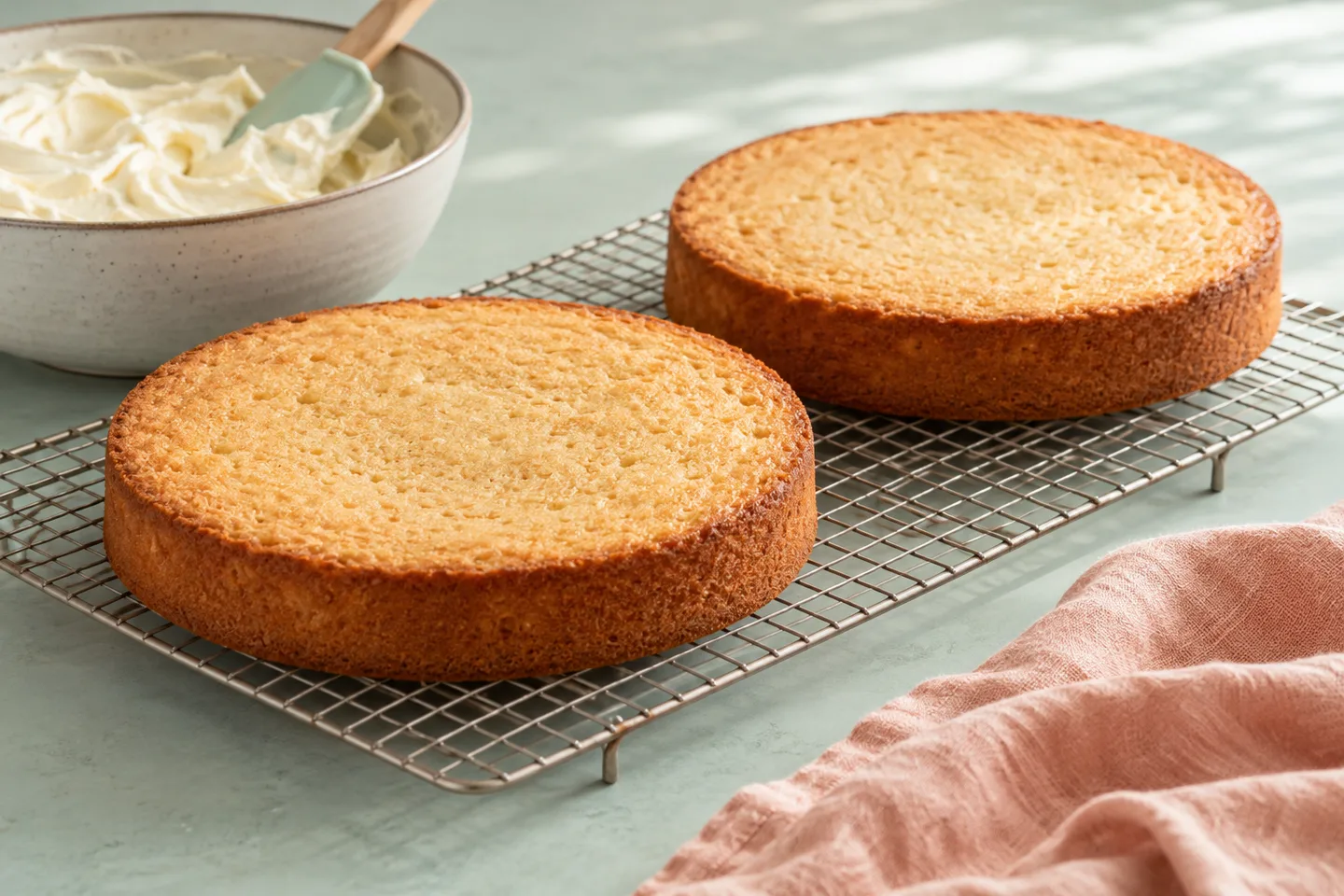
Suppose a recipe worked in two shallow metal pans but sank when the whole batter went into one deep tin. The most informative next bake is the original two-pan arrangement. Keeping the deeper pan and simultaneously adding flour, reducing sugar and raising the temperature makes the result much harder to understand.
If the original arrangement works again, the depth change becomes a plausible explanation. It does not prove that every deep cake will fail; it shows that this recipe and schedule did not transfer directly. Choose a recipe developed for the deep tin if that is the shape you want.
When the problem is a familiar pan and a new oven
Use the same ingredients, pan and mixing method, then check oven mode and actual temperature behavior. Note whether the exterior colors unusually early or the stated baking window is no longer sufficient. A fan setting may need different guidance from the previous conventional oven.
Do not begin by assuming the recipe suddenly needs extra leavening. The physical setup changed, so investigate that change first. Preserve the batter formula until you have evidence that it is the source of the problem.
When the problem is a modified recipe
If you reduced sugar substantially or replaced an ingredient, bake the original formula again when practical. That gives you a reference. A successful original and a failed adaptation point toward the formulation change, although you should still check execution.
For an important occasion, choose a tested recipe that already meets the desired adaptation. A low-sugar cake, egg-free cake or gluten-free cake needs a coherent method, not a collection of emergency substitutions.
Record the result before correcting its appearance
A photograph of the unfrosted top and cooled cut face can be useful. Include the pan dimensions, batter weight per pan, oven mode and the cues used to end baking. This record helps distinguish a wet center from an even, fully baked crumb with a shallow cosmetic dip.
A short record is enough. You do not need a laboratory spreadsheet, and you should not call the result an expert test. The aim is to connect one deliberate change with a carefully observed outcome so the next cake is more predictable.
Once the process works, repeat it before introducing another change. Consistency gives you a dependable base for decorating, serving and later adaptations. A recipe you understand is more valuable than a sequence of unrelated cakes that happen to look successful.
A focused next-bake checklist
- Use the original recipe and confirm the exact flour and leavener.
- Weigh the main ingredients and level small spoon measurements.
- Match the pan's interior size, material and depth.
- Check the oven mode and preheat properly.
- Follow the mixing method, scraping the bowl where needed.
- Judge doneness in the center using the recipe's combined cues.
- Cool as directed and record what changed.
If the cake was deep in a substituted pan, address pan depth first. If it ballooned and collapsed, check leavening and formulation. If the middle was wet, focus on baking completion. A targeted repeat tells you more than a new recipe with several unexplained changes.