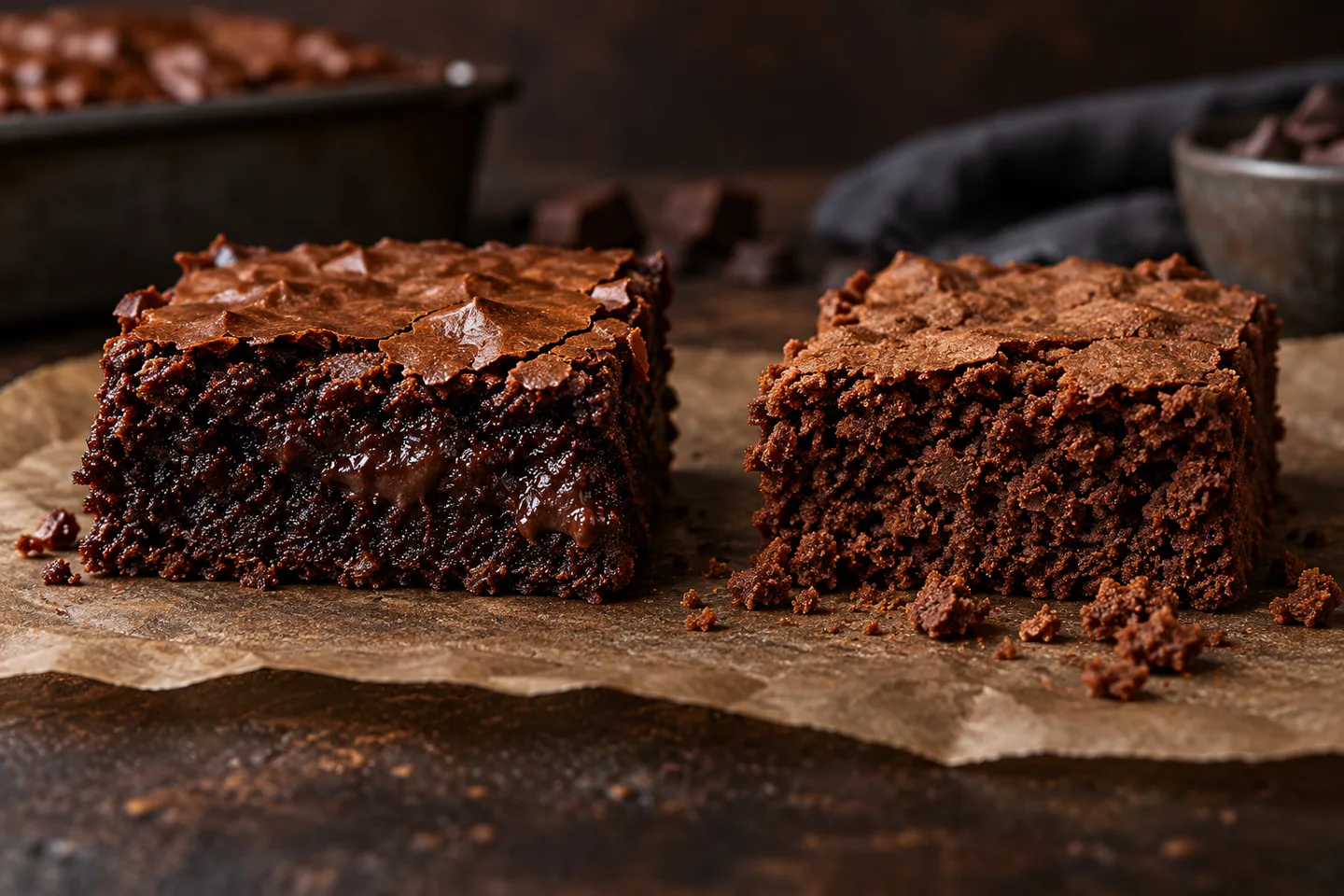
Dry brownies usually come from baking too long for the pan and oven, measuring too much flour or cocoa, or using a formula designed for a different texture. Fudgy brownies begin with the right ingredient balance; they are not simply ordinary brownies removed while the middle is raw.
Before changing the recipe, check what “dry” means in your batch. Crumbly throughout, firm only at the edges, and pleasantly dense after chilling are three different results. Each points toward a different adjustment.
Define the texture before diagnosing dryness
Choose a fudgy formula first
Brownies fall along a range from dense and fudgy to chewy and cake-like. Fat, sugar, chocolate, flour, eggs and mixing all contribute. A recipe written for a light, cake-like crumb will not necessarily become fudgy if you shave several minutes off its bake.
King Arthur's guide to brownie textures describes these styles as different formulations. Use that distinction to choose a recipe whose intended result matches the brownie you want, rather than trying to force one style into another.
Read the recipe's introduction and photographs, but also read its actual method. Melted chocolate, cocoa-only batter, creamed butter and whipped eggs can lead to different structures. “Chocolate brownie” alone does not tell you the target.
Dense does not always mean dry
A chilled brownie can feel firmer because its fats have cooled. Let a sound brownie come to the serving temperature intended by the recipe before judging its texture. A dense, smooth bite is different from a dusty crumb that breaks apart.
A glossy top is also not a complete texture diagnosis. Surface appearance can reflect how sugar and eggs were handled, while the interior depends on the whole formula and bake. Do not keep baking merely to produce a particular crust.
Read the recipe as a texture map
Before your next batch, identify whether the formula uses melted chocolate, cocoa or both. Note whether butter is melted or creamed, whether eggs are whipped, and whether the method includes chemical leavening. Those choices tell you more about the intended structure than the word “brownie” alone.
Also look at the batter depth and portion size in the recipe. A thin brownie intended for a large tray may have a different edge-to-center balance from a thick square-pan brownie. Comparing them at the same bake time is not a fair texture comparison.
Audit substitutions separately
Write down every departure from the ingredient list. A different chocolate type, reduced sugar, a butter alternative and an extra spoonful of cocoa can interact. If several changed at once, return to the original or choose an adapted recipe instead of trying to identify one culprit from the finished piece.
Do not assume cocoa percentage describes every property of a chocolate product. A chip designed to keep its shape and a bar intended to melt can behave differently in a method. Follow the recipe's ingredient description as closely as practical.
Compare a cooled center and an edge
A brownie pan naturally contains pieces with different amounts of exposed edge. The corner may be firmer than the middle even in a well-executed batch. Decide whether your complaint is normal variation or dryness across the entire slab.
If only corners are too firm, review pan material and baking time before adding more fat to the whole formula. If the center is dry too, check the initial ingredient balance and whether you waited for a completely clean tester when the recipe expected moist crumbs.
Make one deliberate repeat
For a measurement concern, weigh the flour and cocoa while keeping the pan and bake method unchanged. For a pan concern, use the original specified pan while keeping ingredients unchanged. For a recipe-style concern, choose a clearly fudgy formula and accept that you are making a new baseline.
Record when you first checked and what cues led you to stop baking. A note such as “center set, tester with moist crumbs, cooled fully” is more useful than “baked less.” It connects the decision to the result.
If the corrected batch is pleasant, repeat it before changing toppings or mix-ins. A dependable plain brownie gives you a foundation for variations. Extra ingredients can then be added deliberately rather than used as an attempt to hide dryness.
These observations belong to your kitchen and recipe. They are not a universal tested ratio for fudginess, and an illustrative photograph cannot establish one. Keeping the comparison modest makes it more useful.
Follow the evidence from ingredients to oven
Check flour and cocoa before blaming the timer
Too much flour gives the batter more dry material than the recipe expects. Packed cups are a common cause. Cocoa is another dry ingredient that needs careful measurement, and adding extra “for more chocolate flavor” can change the texture.
Use the author's gram weights when provided. Cocoa can compact too, so weighing it is useful. If you measure by cups or spoons, follow the recipe's method rather than scooping firmly from the package.
For a simple illustration, 20g extra flour in a formula calling for 100g is a 20% increase. That is not a tiny change just because it looks like a small handful. The impact depends on the formula, but the arithmetic shows why accurate measuring deserves attention.
See how to measure flour correctly before reducing liquid or adding more fat to a recipe that may simply have been overmeasured.
Use the chocolate the recipe describes
Unsweetened chocolate, semisweet chocolate and chocolate chips are not equivalent ingredients. They differ in sugar, cocoa components and formulation. A cocoa powder can also be natural or Dutch-processed, which matters when the recipe relies on acidity or alkalinity.
If the formula names a chocolate percentage or cocoa type, begin there. Replacing a large amount of melted chocolate with cocoa powder is not a direct volume swap. Choose a cocoa-based recipe if cocoa is what you have.
The wrong pan can overbake the same batter
A larger pan spreads the batter into a thinner layer. It can finish before the original timer says to check. A smaller pan makes the middle deeper and may leave the edges done while the center still needs time.
Measure the interior dimensions. An 8-inch square has 64 square inches of base area; a 9-inch square has 81. The larger pan has about 27% more area, so the same batter becomes considerably shallower. That is a geometric example, not a tested baking-time conversion.
Pan material and color add another variable. Dark metal can brown surfaces differently from light metal, and glass retains heat differently. Do not use the original time as a fixed instruction after changing both size and material. Our guide to glass versus metal pans explains those trade-offs.
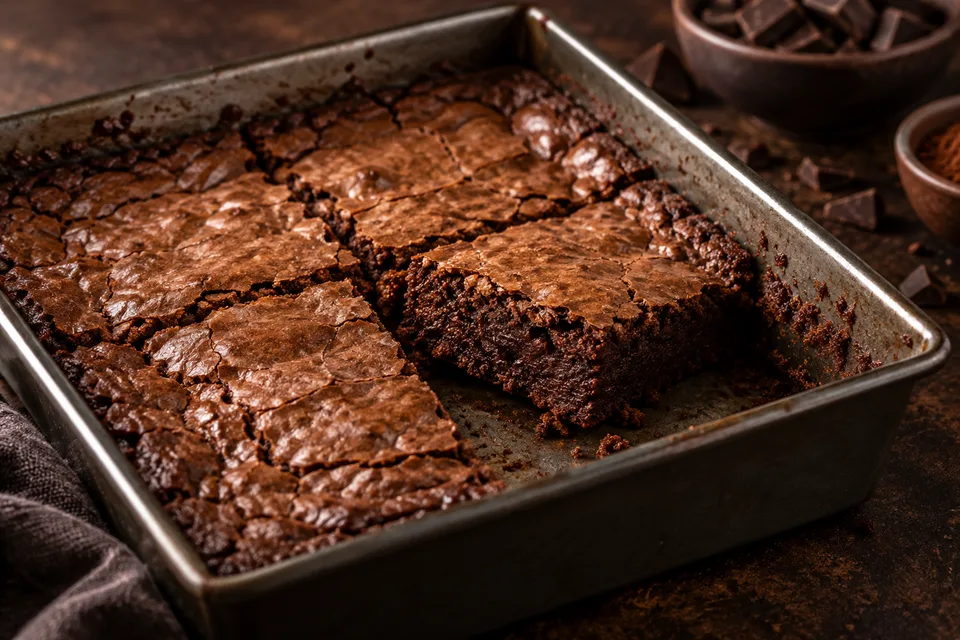
Carryover heat matters after removal
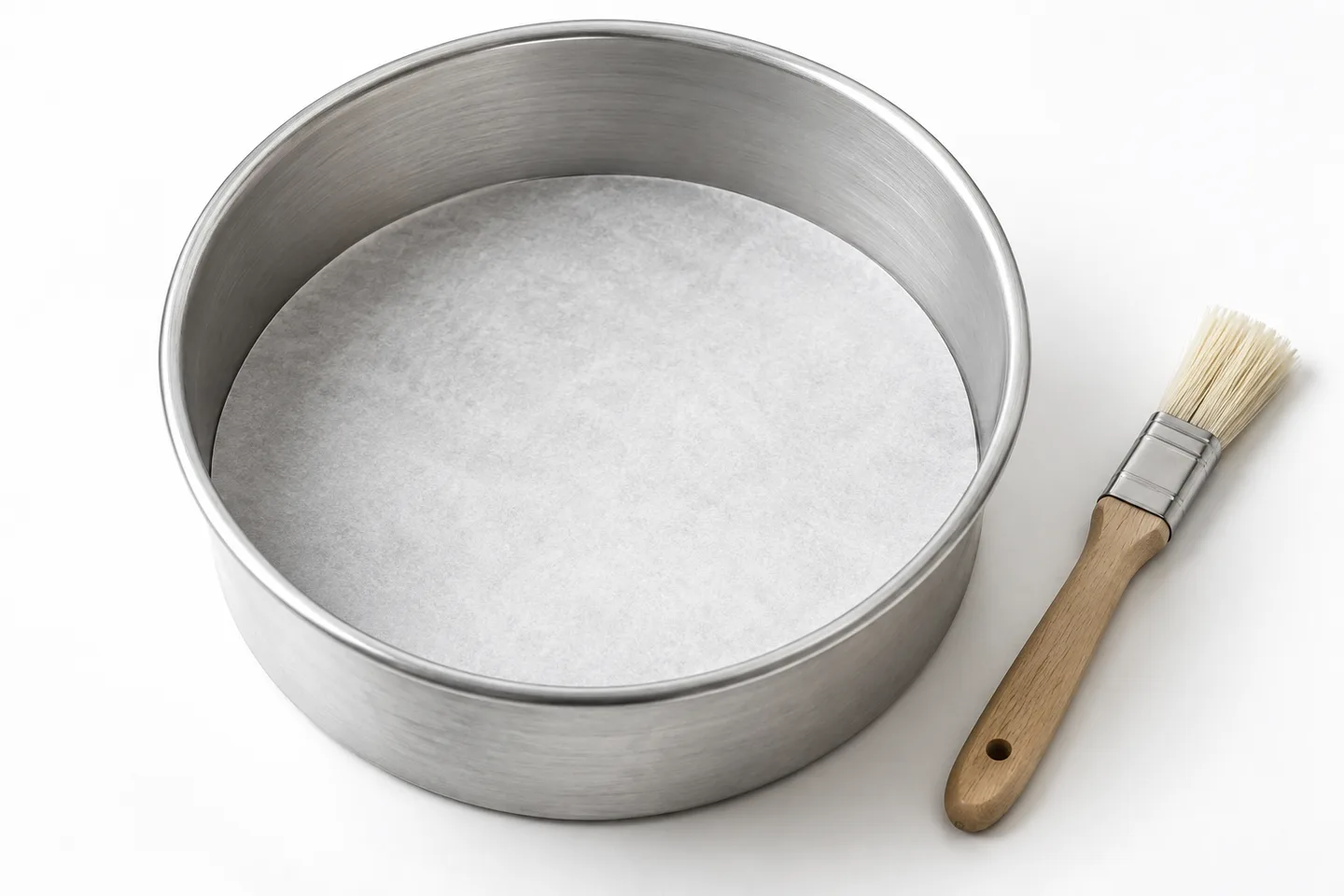
The pan continues to transfer heat after leaving the oven. Follow the recipe's cooling and lifting instructions, including any parchment sling. Leaving a finished brownie in a heat-retaining pan longer than intended can affect the edges.
Do not lift a fragile hot slab simply to stop cooking faster. It may break before its structure settles. The goal is to follow a recipe developed for that pan and cooling method, not improvise a dramatic transfer.
Judge brownie doneness for that recipe
Start checking at the recipe's earliest suggested point, especially if your oven runs hot or the pan changed. Look for the specified set edges and center appearance. A tester may be expected to carry moist crumbs rather than emerge completely spotless.
Wet, fluid batter is not the same as a moist crumb. Chocolate pieces can also smear a tester, so test another spot if necessary. The recipe's combined signs should guide you rather than a single universal toothpick rule.
The FDA advises against eating raw flour, dough or batter. Fudgy texture should not rely on serving an uncooked center.
Do not use the top crust as a timer
A top can set before the interior is ready. Conversely, a recipe may finish without the exact shiny crust shown in another brownie photograph. Check the center and the recipe's instructions, not just surface gloss.
If every batch develops very dark edges before the center finishes, investigate oven temperature, pan choice and batter depth. Simply cutting away the edges each time hides useful information about the setup.
Check whether the oven is the repeating variable
An oven can be hotter than its display suggests, or have strong hot spots. Preheat properly and place the pan where the recipe recommends. If one side always dries first, note its orientation and compare a more central position.
Use an independent thermometer to investigate repeated discrepancies, recognizing that ovens cycle around their setting. One reading taken immediately after opening the door is not a complete calibration check. Follow the appliance manual before changing settings.
Read why ovens bake unevenly if browning differs across the pan. A mid-bake rotation may help in some recipes, but avoid frequent door opening while the batter is still structurally fragile.
Check what happened during mixing and cooling
Mixing and substitutions can push texture toward cake
A method that incorporates substantial air can create a different structure from a simple stir-together method. Some brownie recipes intentionally beat eggs and sugar; others ask for minimal mixing. Follow the chosen recipe rather than assuming more beating always improves it.
After flour is added, combine as directed and scrape the bowl so dry pockets disappear. Vigorous prolonged mixing is not a universal way to make brownies fudgier. Stop when the method's target is reached.
Reducing sugar or fat can make brownies less supple. Replacing eggs or using a flour substitute can change setting behavior. If you need a dietary adaptation, start with a recipe designed for it. Adding random extra oil to the next batch may mask one problem while creating another.
Cooling and storage can change your judgment
Many fudgy brownies cut more cleanly after cooling. A hot piece can seem unusually soft, while the same piece later has a coherent dense texture. Compare at the temperature the recipe intends before deciding it was under- or overbaked.
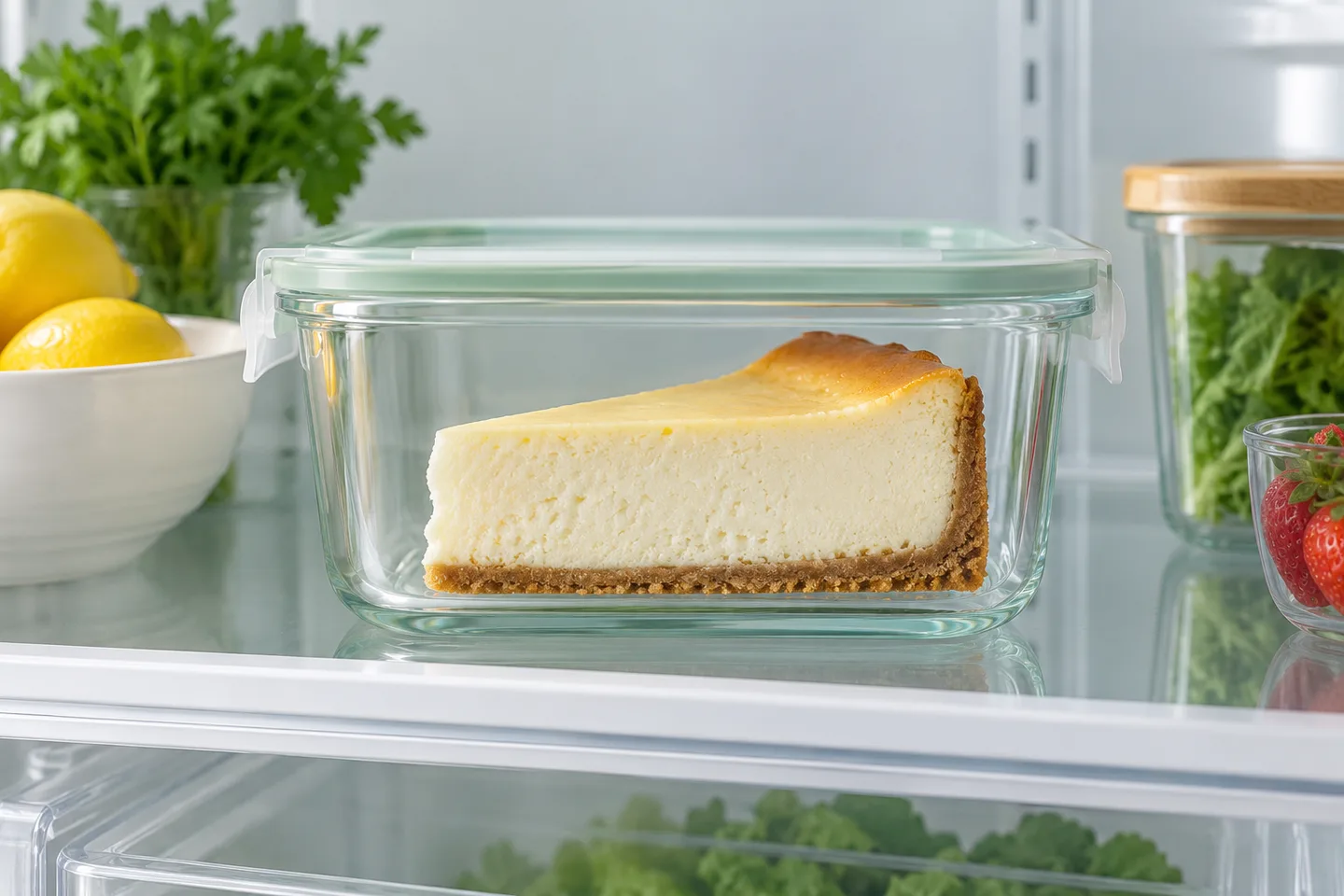
Once fully cool, protect ordinary brownies from unnecessary air exposure. Keep the slab whole until serving where practical, or package portions closely. Cut edges expose more crumb and can dry sooner.
Brownies with cream cheese, custard or other perishable toppings need storage appropriate to those ingredients. Do not apply plain-brownie countertop habits to a filled or topped dessert. Freeze suitable excess while it is still good rather than keeping a huge batch uncovered.
Use the batch wisely and plan the next one
What can you do with an already dry batch?
If the brownies are fully baked and otherwise suitable to eat, serve small portions with an appropriate accompaniment or use crumbs in a dessert recipe. A sauce can make them more enjoyable, but it does not restore the original crumb structure.
Do not soak a whole batch in an improvised perishable topping and then keep treating it as a plain brownie. Once you add cream or another temperature-sensitive component, its storage requirements change.
For the next bake, choose one likely correction. If the batter was shallow in a larger pan, match the original pan first. If measurements were approximate, weigh them first. If the recipe was cake-like by design, select a fudgy formula instead.