For homemade cheesecake, a conservative plan is to refrigerate promptly at 40°F (4°C) or below and use it within 3–4 days, applying the USDA's general guidance for cooked leftovers. Follow a shorter recipe-specific instruction when one is provided. Commercial products may have their own validated label instructions; do not replace those with a generic homemade-cake estimate.
That planning period assumes the cheesecake was prepared, cooled and stored safely. It does not restart each time you move it to a new box, add fruit or take it out for a serving. A cheesecake that spent too long warm is not made safe by putting it back in the refrigerator.
Establish the cake’s date and cold-storage history
When does the storage clock start?
For a homemade cake, record the preparation date, not the date you first cut a slice. If you bake on Monday and serve on Wednesday, the leftovers do not become newly made on Wednesday. A written date removes guesswork when the refrigerator contains several similar containers.
For a purchased cheesecake, follow the package's use-by, refrigeration and after-opening instructions. A frozen cheesecake may have a separate thawed-storage direction. Keep the original label or photograph it before discarding the box.
If you receive an unlabeled cake and cannot establish when it was made or how it was held, appearance alone cannot answer the question. Ask the person who prepared it. If its handling history is uncertain, choosing not to serve it is safer than inventing a fresh deadline.
Cold storage matters more than a neat date label
Cheesecake contains perishable ingredients and needs appropriate refrigeration. Use a refrigerator thermometer rather than trusting the setting number on the control. Keep the cake on a stable shelf, protected from drips and contamination, not somewhere repeatedly warmed by the door opening.
The USDA's leftovers guidance calls for refrigerating perishable food within two hours, or one hour above 90°F (32°C), and using refrigerated leftovers within 3–4 days. This article applies that conservative general framework to homemade cheesecake rather than claiming a special universal cheesecake deadline.
Count cumulative exposure during handling and serving. A cake left out before transport, then again at a party, has more than one warm interval. Bringing it back to the refrigerator between intervals does not erase the earlier exposure.
Cooling should be planned into the recipe
A baked cheesecake needs a recipe with a clear cooling sequence. “Cool completely overnight on the counter” is not a safe default for a perishable dessert. Plan the bake early enough to chill it properly without extending room-temperature holding beyond safe guidance.
Where a recipe's texture-oriented cooling instructions seem to conflict with safe holding advice, choose a recipe or authoritative method that addresses both. Avoid improvising a prolonged warm oven rest simply because the surface might crack otherwise.
Keep a storage record that survives serving and freezing
A useful label has the preparation date, the type of cheesecake and the freezing date if applicable. Keep any commercial thawing instructions with the package. “Put away Tuesday” is less informative than knowing when the cake was actually made.
For example, a cake prepared on Monday and partly served on Wednesday still has Monday as its preparation reference. Adding a new layer of fruit or transferring the remainder to a clean container does not turn it into Wednesday's freshly made dessert. The container change improves protection, not age.
Track the whole serving sequence
For a gathering, note when the cake leaves refrigeration, how it travels, and when serving begins. These are cumulative handling stages. A cold-looking box at arrival does not reveal how long the cake sat on a counter before departure.
Keep a chilled reserve separate from the serving portion. If the portion on the table exceeds safe holding conditions, do not mix it back with the protected reserve. Separate packaging makes that decision easier and protects a cake that has remained appropriately chilled.
Do not use the date as the only decision
A cake within a planned refrigerator period can still be unsuitable if refrigeration failed or it was handled poorly. A label is a memory aid, not proof of safety. Temperature and handling records remain part of the assessment.
If you discover a problem with the refrigerator, use authoritative guidance for the actual time and temperature exposure rather than assuming cheesecake is protected by its sugar or appearance. When that information is unavailable, do not guess a new safe serving period.
Quality changes can happen before a safety concern is visible
A dry surface, weeping fruit or softened crust may make a cake less enjoyable without telling you whether it is safe. Conversely, a visually perfect slice does not establish safe handling. Keep the questions separate: “Will this taste as intended?” and “Has this been handled appropriately?”
Store toppings separately where the recipe allows it. A plain chilled portion can be easier to protect and freeze than a fully decorated one. Add only what you need for the next serving instead of decorating the whole remaining cake repeatedly.
For households that rarely finish a whole cheesecake, choose smaller recipes or freeze measured portions early. The best waste-reduction plan is planned portioning, not a longer refrigerator deadline invented after the cake has already been waiting.
Before storing: identify the cake and cover it
Baked, no-bake and topped cheesecakes
| Product | What to check | Storage priority |
|---|---|---|
| Homemade baked cheesecake | Cooling sequence, preparation date and refrigerator temperature | Prompt chilling and a conservative leftover schedule |
| Homemade no-bake cheesecake | Ingredient safety and the recipe's instructions | Continuous refrigeration; no assumption that it is shelf-stable |
| Commercial cheesecake | Package instructions before and after opening or thawing | Follow the product's actual label |
| Cheesecake with fruit or cream | Storage needs of the topping as well as the cake | Use the shorter applicable instruction |
No-bake does not mean low-risk. A product that does not receive a baking step needs ingredients and a recipe appropriate for eating without further cooking. Do not adapt a raw-egg baked filling into a no-bake dessert by merely chilling it.
Fresh fruit can release liquid and change surface quality. Whipped cream and other toppings bring their own handling needs. Adding them later does not extend the life of the cake underneath. If possible, store toppings separately and add them close to serving.
How to cover cheesecake without damaging it
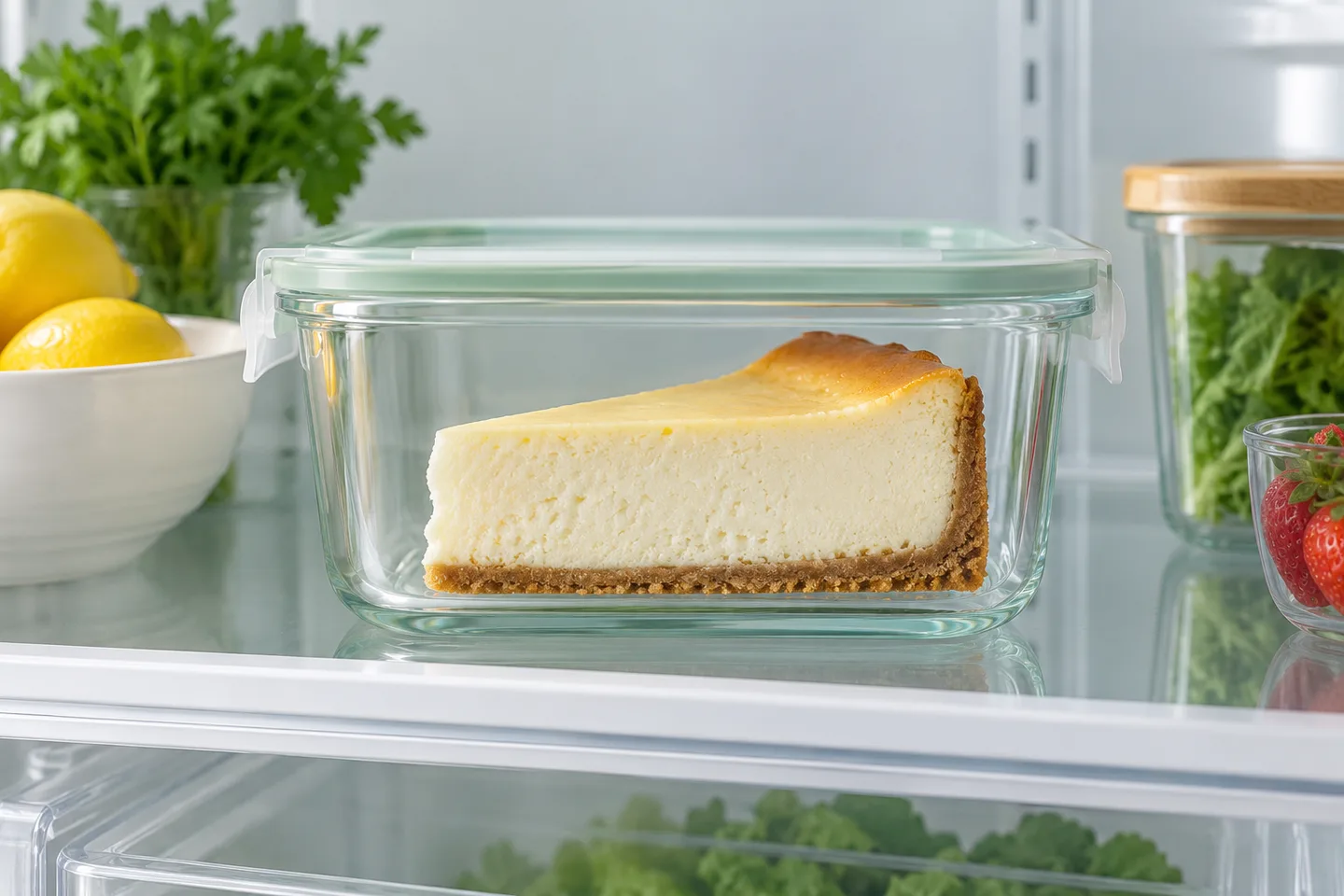
Once it is appropriately chilled, protect cheesecake in a clean covered container or with food-safe wrapping suited to its surface. A tall container can prevent plastic wrap from sticking to toppings. The cover limits drying, odors and incidental contact; it is not a substitute for refrigeration.
Keep a whole cake covered and cut portions with a clean knife. Wipe or wash the knife appropriately between messy cuts, and use clean serving utensils. Avoid repeatedly touching the remaining cake with hands used for other food preparation.
Store slices in smaller containers if you expect several separate servings. Smaller portions are easier to take out briefly and return without exposing the entire cake. Do not let an uncovered slice sit beside raw ingredients or beneath a container that might drip.
Transport requires the same cold plan
A chilled cake in a decorative box is not automatically kept cold during a drive. Use insulated transport with sufficient cold packs and maintain appropriate temperature. Keep it out of a hot vehicle while running other errands.
Ask where the cake will be refrigerated at the destination. If the party venue has no suitable cold storage, bring a smaller portion close to serving or choose a dessert that fits the conditions. Good planning prevents the need to guess afterward.
While serving: protect the chilled reserve
A serving plan that protects the remainder
Bring out a small serving portion and leave the reserve refrigerated. Use a clean cake server and replace the serving plate when appropriate rather than continually topping a warm plate with fresh slices. Keep the refrigerated reserve separate from leftovers that have been on the table.
For a party, note when the dessert is first set out. Warm weather shortens the permissible holding period. If you cannot keep it cold, make the serving window clear and discard food that exceeds safe time limits.
For a household, individual containers can simplify the routine. Take one out, close the refrigerator, and eat it rather than leaving the whole cake beside you while you decide on a second slice. This protects both texture and the cold chain.
For longer storage: freeze suitable portions
Freezing is useful when you know you will not finish the cake within the planned refrigerated period. Freeze a cheesecake that has been handled safely and is still suitable to eat. It is not a way to rescue a cake that has already spent too long warm.
- Chill the cake as the safe recipe directs, then decide on whole-cake or individual portions.
- Wrap or package portions so surfaces are protected and excess air is limited.
- Use a freezer-safe container or a second protective layer if necessary.
- Label the preparation and freezing dates, including the type of topping.
- Keep the freezer at 0°F (-18°C) or below.
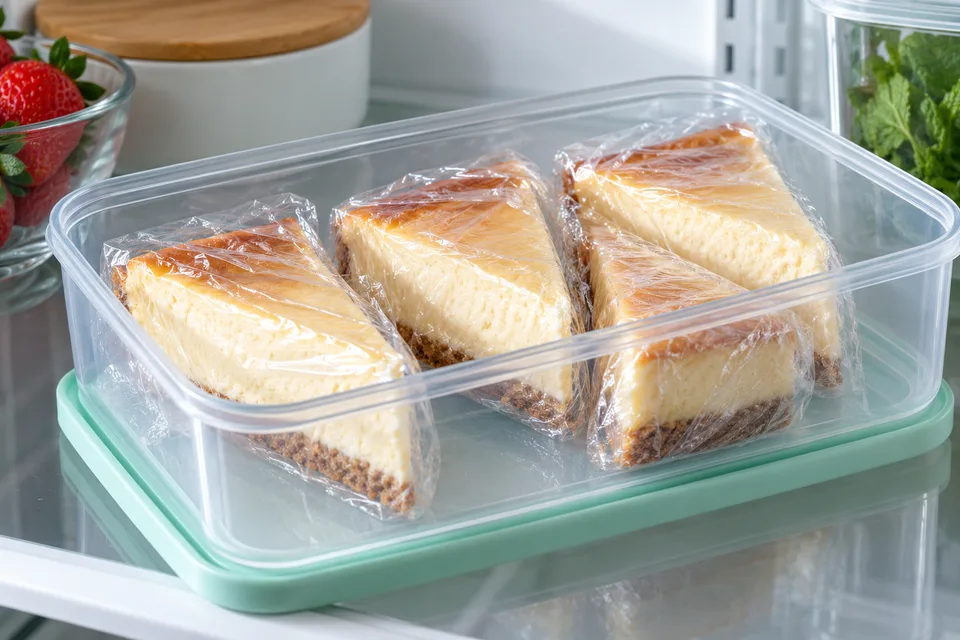
Texture after freezing varies. A dense baked filling may handle it differently from a whipped no-bake filling, and watery fruit toppings can become less attractive. If a recipe gives freezing instructions, use them. Otherwise, freezing one safely handled portion first can tell you whether its quality suits your expectations.
FoodSafety.gov distinguishes freezer-quality guidance from safety. Continuous freezing protects safety, but it does not stop every texture change or repair unsafe handling before the freeze.
Thaw in the refrigerator
Move the wrapped portion to the refrigerator and allow enough time for an even thaw. Do not leave a whole cheesecake on the counter to speed up the process. Large cakes take longer than single slices, so plan ahead.
Use the thawed cake promptly and follow the recipe or product's thawed-storage instructions. Do not treat freezing as a way to grant every cake a new unlimited refrigerator life. Recording dates before freezing helps you avoid that mistake.
Before eating: make the safety decision
Smell and appearance cannot prove safety
Visible mold, an unusual odor or unexpected sliminess are reasons not to eat the cake. Do not trim a moldy surface and serve the remaining soft dessert. Do not taste a questionable bite to decide.
Some unsafe food looks and smells ordinary. That is why time, temperature and handling history matter. A cheesecake left warm too long can look perfect; a safely chilled cake with a crack can be entirely normal. Cosmetic quality and food safety are different assessments.
If you cannot establish the cake's history, the absence of visible spoilage is not enough. This is especially important when serving people at higher risk of foodborne illness. Use a freshly prepared or properly labeled product rather than asking guests to accept a guess.
Helpful next reads
If you are planning other desserts, compare cheesecake's perishable nature with storage for ordinary soft cookies. Do not apply cookie countertop advice to a dairy-rich cake.
For preparation equipment, see choosing the right cake pan and glass versus metal baking pans. Pan choice affects baking behavior, but it does not change the need for safe chilled storage afterward.