The best way to store fresh bread depends on which texture you want to preserve. Soft sandwich bread benefits from close wrapping after it cools. A crisp artisan crust benefits from more airflow for immediate use, but its crumb dries sooner. For bread you will not eat soon, freeze it while fresh rather than asking one container to preserve everything indefinitely.
No storage method keeps a loaf exactly as it was when it left the oven. The goal is to control the trade-off between a crisp exterior, a moist interior and a sensible amount of bread ready to eat.
Start with the texture you want to keep
Choose the texture before choosing the container
A sealed plastic bag slows moisture loss from a soft loaf. The same bag traps enough moisture to soften a crisp crust. Paper lets moisture escape, which suits a baguette being served soon but leaves its crumb less protected. A bread box changes the environment, but it cannot suspend those changes.
Think about the next use. Bread for toast does not need the same fresh-crust character as bread for a dinner table. Soft sandwich slices should stay flexible. A crusty loaf for tonight may be kept whole until serving, while tomorrow's extra portion can go directly into the freezer.
| Your goal | Useful approach | Expected compromise |
|---|---|---|
| Keep a soft loaf supple | Cool completely, then wrap closely | Any crisp crust softens |
| Keep a crust crisp for a nearby meal | Leave whole or protect the cut face with breathable coverage | Crumb dries sooner |
| Save slices for future breakfasts | Freeze in portions in airtight packaging | Needs thawing or toasting |
| Store bread with a perishable filling | Follow refrigerated storage requirements | Texture may need refreshing afterward |
Two storage routines for two different loaves
For a soft loaf used for sandwiches, start by cooling it fully. Keep the near-term portion in a well-sealed bag, with the cut face protected and the bag closed after each use. Slice and freeze the reserve while it is still supple. This routine values a flexible crumb more than a crisp crust.
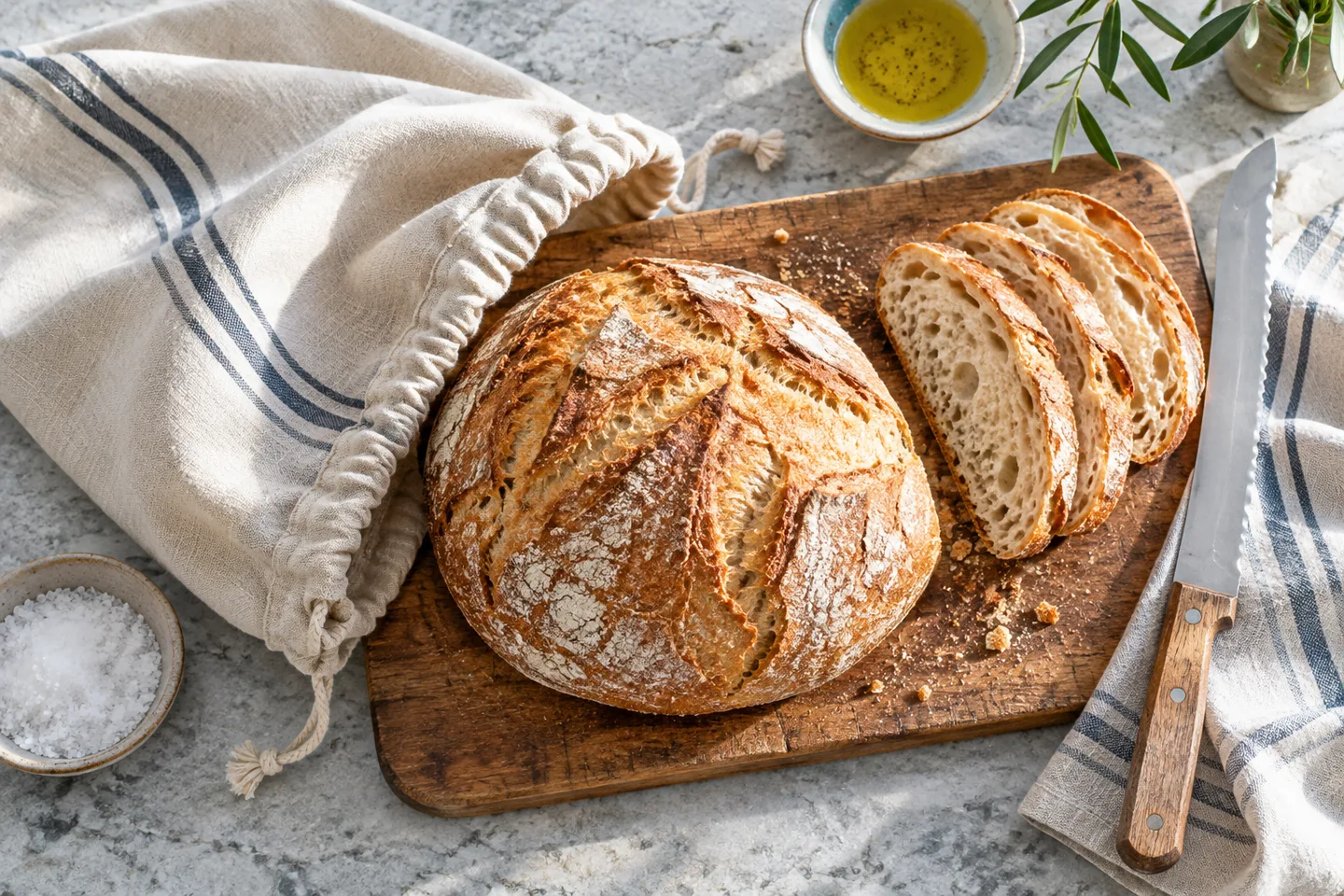
For a crusty loaf served with dinner, keep it whole until close to the meal. After cutting, protect the exposed crumb for short-term use and choose coverage that respects the crust you want. Freeze the extra portion instead of leaving a large remainder exposed for several days. Refresh only the sound portion you intend to serve.
Neither routine is a fixed safety timetable. The bread's ingredients, actual storage conditions and observed condition still matter. They are different ways to preserve a texture for a planned use.
Check what happens after you open the package
A good seal helps only when it is restored. If the bag is opened for breakfast and left loosely folded until evening, the remaining bread experiences a different environment from the carefully packed loaf. Make closing the package part of serving, not a task for later.
Keep crumbs and damp utensils out of the storage container. If you wash a reusable bag or box, let it dry fully before refilling it. Bread that enters a damp container starts with an avoidable disadvantage.
Do less to the entire loaf
Repeatedly slicing, warming and repacking the full loaf exposes every remaining portion to handling and moisture changes. Prepare what you need and protect the rest. A small household benefits especially from early portioning.
If you often decide on storage only after the loaf is half stale, move the decision to baking day. Knowing whether you want tomorrow's sandwiches, tonight's dinner bread or next week's toast makes the packaging choice much clearer.
On baking day: cool before putting bread away
For ordinary plain bread, cool the loaf on a rack before sealing it. The rack keeps the underside from sitting in its own moisture. A loaf that feels cool outside can still release warmth and steam from its center, especially if it is large.
Sealing warm bread creates condensation. Droplets inside a bag are a visible clue that moisture is being trapped. The crust can become leathery, and damp packaging is not a useful place to leave bread. Wait until the loaf is fully cool rather than using a fixed cooling time for every shape.
Do not confuse this texture advice with safe handling of filled bread. A loaf or roll containing a filling that needs chilling should follow the recipe's cooling and refrigeration instructions. The priority for that product is safe storage, not preserving a brittle crust.
Leave the knife alone for a little longer
Cutting hot bread releases moisture quickly and can damage a crumb that has not settled. If you want warm bread immediately, accept that it will not provide the same storage result as a fully cooled loaf. For a loaf intended to last through several meals, cool it before dividing it.
A clean serrated knife allows you to cut without crushing. Avoid sawing soft bread with heavy downward pressure. Squashed slices can seem dense even when the bake itself was fine; that is a handling issue, not a storage failure.
For the next meal: soft and crusty loaves need different care
A routine for soft sandwich loaves
Once the loaf is cool, put it in a clean, food-safe bag or container that closes well. Push out excess air gently, without compressing the bread. Keep it in a cool, dry place away from sunlight and the heat of appliances.
Leave the loaf mostly whole if you will slice it as needed. Each exposed cut face loses moisture faster than an intact crust. If convenience requires all the slices ready at once, freeze part of the sliced loaf rather than leaving every slice exposed to the same countertop conditions.
Close the bag again after each use. A bread bag folded loosely over the top is not the same as a good seal. Store plain bread separately from strong-smelling foods, because packaging and crumb can pick up odors.
What about reusable bags?
A reusable bag is useful if its material and closure suit the bread. A fabric bag may be attractive and breathable but will not retain moisture like a well-sealed freezer bag. A coated reusable bag may protect the crumb better. Wash and dry it as its manufacturer directs.
The environmental value of a reusable container comes from using it successfully and keeping it clean. If bread repeatedly goes damp or dry in it, change the routine rather than treating the container's marketing as a guarantee.
A routine for crusty loaves
Keep a loaf whole until serving when possible. After cutting a large plain boule, resting the cut face against a clean board can protect the exposed crumb for short-term use. A breathable cover may help keep the outside from being tightly enclosed, but it does not stop staling.
King Arthur's bread-storage guide discusses the trade-off between wrapping and crust texture. The practical lesson is to match packaging to the bread and its next use, rather than search for a single “best” bag.
If you seal a crusty loaf to preserve its crumb, expect the crust to soften. That can be a reasonable choice. Refreshing a sound portion before serving may restore some crispness, although it will not make old bread permanently fresh again.
Why a bread box is not a complete solution
A bread box can organize storage and keep bread away from direct light, but its ventilation, size and cleanliness vary. A tightly packed box with damp crumbs creates a different environment from a dry box containing one cooled loaf.
Use the box as part of a routine: clean it, let it dry, avoid overcrowding, and inspect its contents. If your kitchen is very warm or humid, freeze extra bread sooner. There is no need to keep a loaf on the counter just to justify the purchase of a bread box.
For later: portion, freeze and refresh
Freeze the portion you will not finish fresh
- Decide whether you want individual slices, half a loaf, or a whole loaf later.
- Cool the plain bread and divide it with a clean knife.
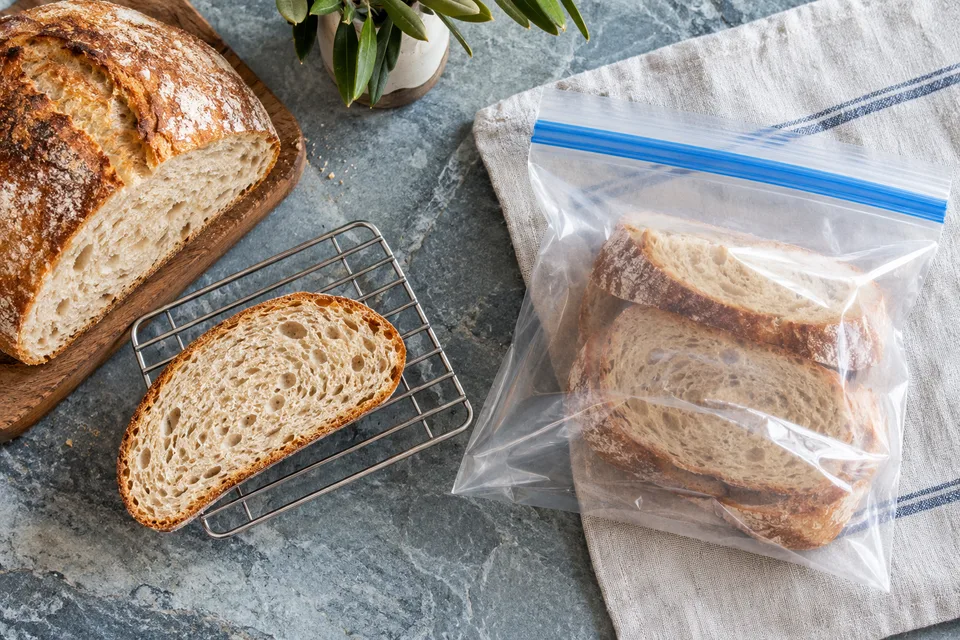
- Wrap closely, then use freezer-safe packaging with a secure closure.
- Label the bread and date so older portions do not disappear behind newer ones.
- Remove only what you need and keep the remaining package sealed.
Individual slices suit toast and sandwiches. A half loaf suits a small dinner. Whole-loaf freezing makes sense when you will serve the entire loaf together. Package according to the occasion rather than following one method simply because it looks tidy.
Press excess air from the bag without crushing the crumb. Double protection can help when the first wrap is not sufficient, but endless layers are unnecessary if a good freezer bag already fits closely. Avoid leaving the bread in an open container next to strongly scented frozen food.
Thaw and refresh without drying it out again
For plain bread, thaw a larger portion in its wrapping, then use it promptly. A slice may go straight into a toaster. If you refresh a crusty loaf in an oven, use a method suitable for its size and formulation, and watch it carefully.
A lightly refreshed crust should be served soon. Repeatedly heating the entire loaf whenever you want one slice dries the remaining crumb. Warm only the portion you plan to eat, especially when the loaf has already been thawed.
Microwaving can briefly soften bread, but it may become chewy or firm as it cools. If you use a microwave, keep the portion small and the heating brief, then eat it immediately. A toaster or oven may better suit the texture you want.
Do not refresh questionable bread
Heat is a texture tool, not a spoilage remedy. Bread that is moldy, smells wrong, or has an uncertain filling-storage history should not be rescued by toasting. Check suitability first and warming second.
USDA guidance calls for discarding moldy bread and baked goods because they are porous. Trimming a visible patch does not establish that the rest is safe.
Make storage fit a smaller household
If one loaf is more than you need, portion it on baking day. Keep enough plain bread for your next meal or two, and freeze the rest. The exact amount is a household decision, not a shelf-life rule.
Consider using smaller pans or a recipe intended for rolls, but do not change pan dimensions casually without adjusting expectations. A smaller, deeper loaf can require different baking time. Dividing a tested roll recipe may be easier than inventing a pan conversion.
Plan secondary uses while bread is sound. A firm heel can become breadcrumbs, and slices can become toast. This approach uses texture change constructively without pretending that every aging loaf remains acceptable.
Know the limits of storage
Three problems storage cannot repair
Storage cannot create an airy crumb in a loaf that was dense at the start. Check the causes of dense bread if the freshly cooled loaf was heavy.
Storage also cannot establish one reliable expiration date. Our article on how long homemade bread lasts separates quality planning from safety decisions.
Finally, storage cannot compensate for a major flour imbalance. If bread becomes dry immediately, review your flour-measuring method before changing its container.