Homemade bread does not have one dependable expiration date. A plain crusty loaf may lose its best texture by the next day, while a well-wrapped soft loaf can remain enjoyable longer. Moisture, ingredients, room conditions and handling all affect the result. These are quality differences, not a promise that any loaf is safe for a fixed number of days.
For ordinary bread without perishable fillings, keep a small amount for immediate use and freeze the remainder while it is fresh. If the bread contains a cream, meat, cheese or other filling that requires refrigeration, follow the storage instructions for that filling rather than treating it like a plain loaf.
Decide what you mean by “lasts”
Bread has a texture clock and a safety clock
Staling is the change that makes bread firmer and less pleasant even when it is not visibly spoiled. The crust may soften as moisture moves outward, while the crumb becomes less supple. A dry slice can still make excellent toast. Mold is different: it is a reason to discard bread, not a reason to warm it up.
The distinction matters because “lasts” can mean several things. A baker asking about a crisp baguette may mean how long the crust stays crisp. Someone preparing lunches may mean how long a sandwich loaf stays soft. Neither question can be answered by a universal food-safety deadline.
Homemade recipes also vary. A lean loaf made with flour, water, salt and yeast differs from a sweet loaf with fat, dried fruit or a moist topping. Commercial bread can have packaging and preservatives that a homemade loaf does not. Do not transfer the date on a store-bought package to your own baking.
Use a planning guide, not an expiration table
| Bread type | What changes first | A practical storage plan |
|---|---|---|
| Crusty baguette or lean roll | The contrast between crisp crust and soft crumb | Enjoy fresh; freeze extra portions promptly |
| Soft sandwich loaf | Crumb firmness or drying at the cut face | Cool, wrap closely, keep only what you expect to use soon |
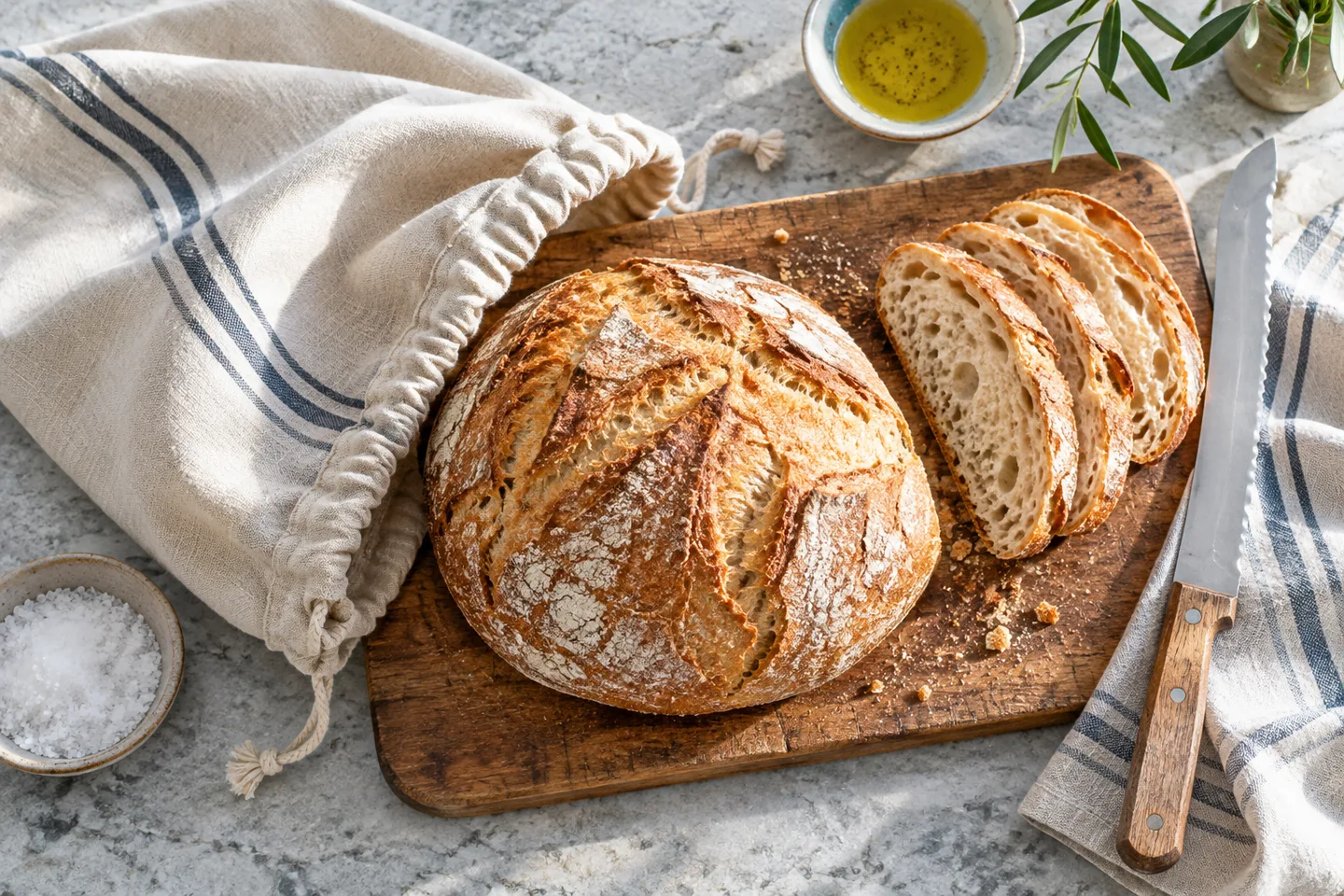
| Large crusty boule | Exposed crumb and crust texture | Protect the cut face; freeze a portion before quality falls |
| Moist or heavily seeded bread | Texture and storage conditions vary substantially | Use the recipe's guidance and inspect carefully |
| Bread with a perishable filling | Safety of the filling determines storage | Refrigerate as required; do not apply plain-bread advice |
This table intentionally avoids a “safe until day five” claim. A warm, humid kitchen and repeated handling create a different situation from a cool room and a clean, dry container. For a predictable schedule, freezing is more useful than stretching countertop storage to its limit.
After baking: cool, divide and protect
The shelf-life decision starts before you put bread away
Wait until ordinary plain bread is fully cool before enclosing it tightly. A warm loaf releases moisture into the bag or box. Condensation can make the crust rubbery and create a damp storage environment. A cooling rack allows air to reach the bottom as well as the top.
Cooling time depends on size and shape. A thin baguette and a large round loaf should not share a stopwatch rule. Check that the center no longer feels warm before packing the loaf for ordinary storage. Bread with perishable fillings is an exception: follow safe chilling guidance rather than leaving it out indefinitely to protect crust texture.
Use clean hands, a clean knife and a clean cutting board. Let a washed bread box dry before replacing the loaf. A container with old crumbs, moisture or a forgotten piece of bread is not a neutral environment. Small habits at this stage help more than an elaborate container that is never cleaned.
Cut only what you need
Every cut creates an exposed surface. Leaving a loaf whole preserves more of the interior than slicing the entire loaf and then keeping all the slices on the counter. For freezing, however, slicing can be useful because you can remove only what you need.
For a household that uses two slices a day, dividing a fresh loaf into a small countertop portion and several frozen portions is sensible. This is a portioning example, not a prediction that any particular bread will keep for a given number of days.
Turn a weekly loaf into a portion plan
Imagine you bake one plain sandwich loaf on a weekend and need slices for several separate breakfasts. Waiting until the last slices become dry before freezing them preserves the least attractive part of the loaf. A better plan is to cool it, keep a modest fresh portion, and freeze the rest in portions that match your routine.
Pack enough slices for one or two uses together, or separate them so individual slices can be removed. Label the package before your freezer contains several visually similar loaves. A simple label with bread type and freezing date is more useful than trying to recognize a recipe through condensation.
Leave the frozen reserve sealed while you take out the portion you need. If you thaw half a loaf and then discover you wanted only two slices, you create another storage decision. Smaller initial portions make the entire process easier to manage.
What if your kitchen is unusually humid?
Do not use a general fresh-use plan as a reason to keep bread out longer in unfavorable conditions. A warm, damp kitchen deserves earlier freezing and more frequent inspection. Keep containers dry and avoid placing bread beside a steaming kettle or dishwasher.
A cooler cupboard may help protect quality, but it is not a controlled food-storage system. Record what happens to your actual plain bread and adjust the amount you keep fresh. If spoilage repeatedly appears early, investigate handling and the storage environment rather than looking for a longer promised shelf life.
Use a date to remember, not to overrule evidence
A label helps you know how old a portion is, but it does not make visibly moldy bread acceptable before the marked day. Equally, a quality planning date is not proof that a sound plain slice becomes unsafe at midnight. The label, ingredients, temperature history and observed condition have different roles.
For bread with a perishable filling, use actual safety-oriented instructions and cold-storage records. Keep that product separate in your notes from ordinary plain loaves. A clear classification is the foundation of a useful schedule.
Between meals: choose the right storage
Counter, refrigerator or freezer?
The counter is for the bread you will use soon
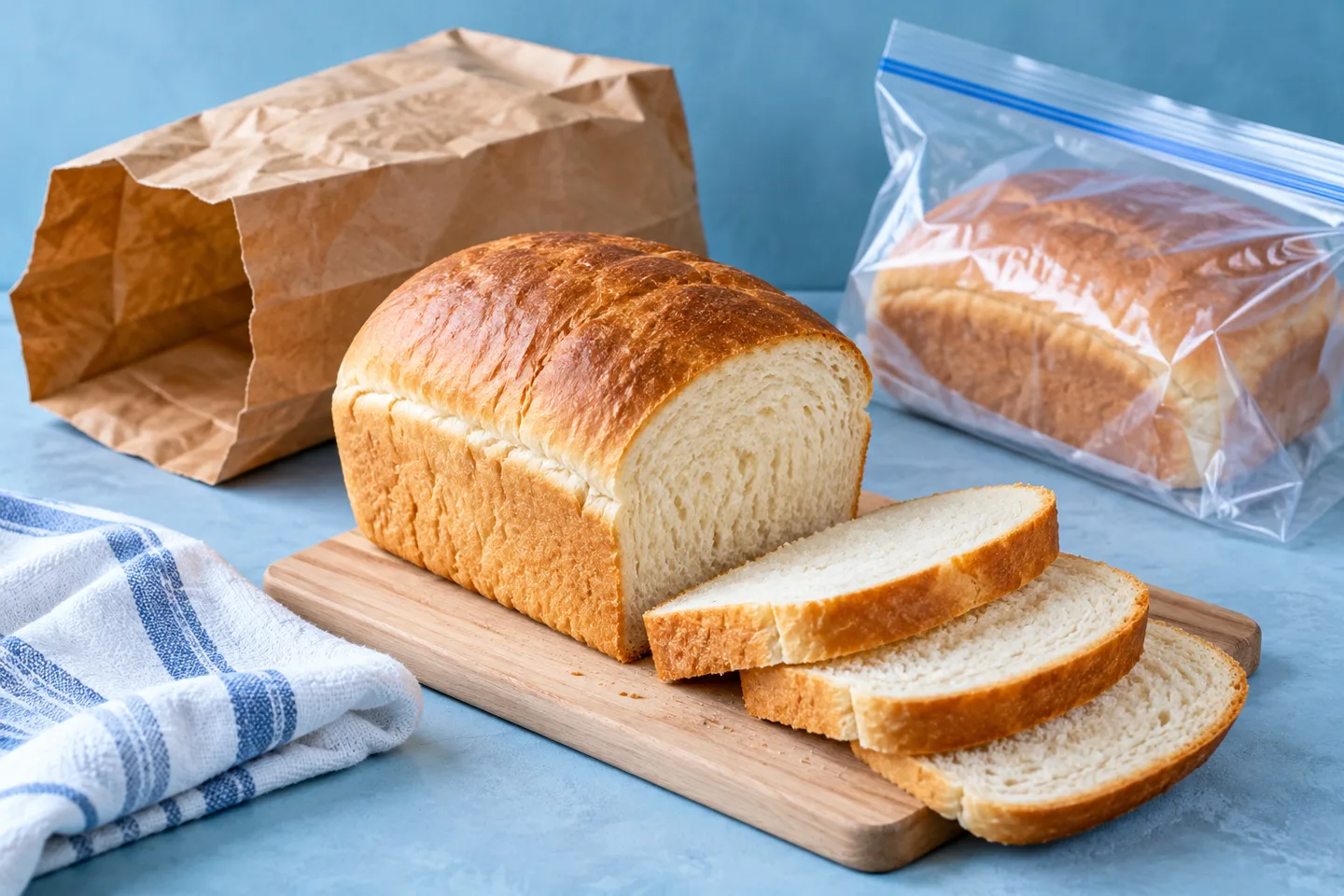
Keep plain bread away from direct sun, oven heat and damp surfaces. A sealed bag suits a soft loaf because it slows drying, though it also softens a crisp crust. Paper or a breathable bag preserves crust character for a shorter period but gives the crumb less protection from drying.
The package should match the goal. A baguette for tonight's dinner does not need the same treatment as soft slices for tomorrow's sandwiches. For the detailed trade-offs, read how to store fresh bread without losing its texture.
The refrigerator is not a texture upgrade for plain bread
Plain bread commonly firms faster in refrigerator conditions than at room temperature. Refrigeration may still be necessary for perishable fillings or toppings. In that case, safety takes priority and reheating or toasting can address some of the texture loss afterward.
Do not leave cream-filled or meat-filled bread on the counter because an article about crust texture recommends room-temperature storage. Classify the product before choosing its location. If a recipe or bakery gives refrigeration instructions, follow them.
The freezer is the most practical longer-term option
Freezing stops the everyday countertop decline far more effectively than hoping another bag will keep a loaf fresh indefinitely. Freeze while the bread still tastes good. Freezing a loaf after it has become dry does not reverse the changes that already happened.
King Arthur's bread-freezing guidance emphasizes airtight packaging and portioning. A home baker can use that principle without treating a suggested freezer-quality period as an absolute safety guarantee.
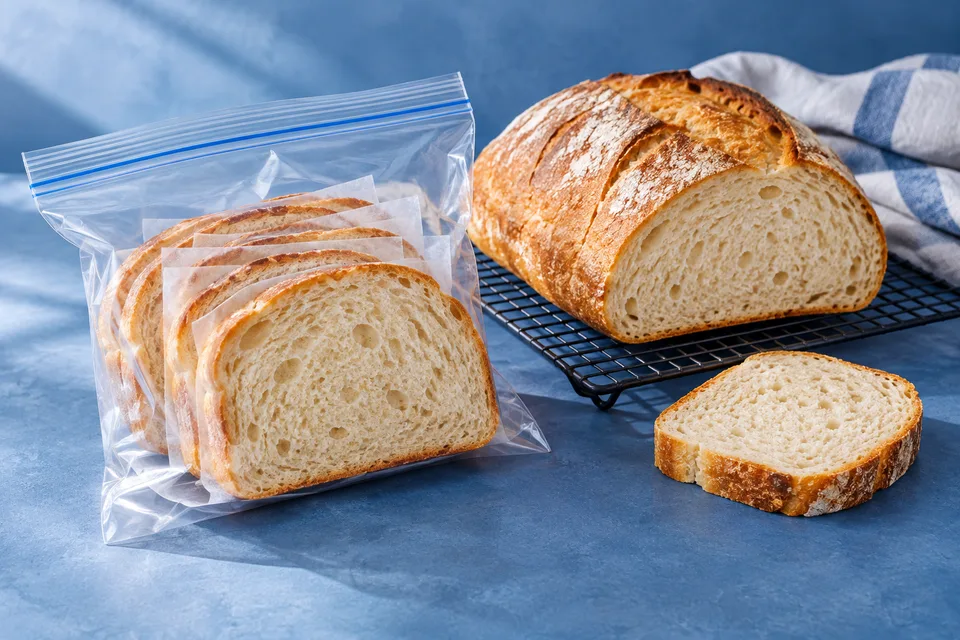
How to freeze bread so it remains useful
- Cool the loaf, then choose whole, half-loaf or sliced portions according to how you will serve it.
- Separate slices if needed so they do not become a block you must thaw all at once.
- Wrap closely or use a freezer-safe bag, pressing out excess air without crushing the bread.
- Label the package with the bread type and freezing date.
- Keep it at 0°F (-18°C) or below, and remove only the portion you need.
The package protects quality by reducing drying and freezer odors. A thin, loosely closed produce bag is less effective than freezer-safe packaging. If you repeatedly open one large bag, keep the remaining slices protected and return them to the freezer promptly.
FoodSafety.gov's cold-storage guidance distinguishes frozen-food quality periods from safety: food kept continuously frozen at 0°F (-18°C) or below remains safe indefinitely, although quality declines. That statement does not make food safe if it was mishandled before freezing or improperly thawed.
Thaw according to the serving plan
Plain bread slices can often go directly into a toaster. A larger plain loaf can thaw in its wrapping so the interior does not dry unnecessarily, then be refreshed according to the bread's needs. Bread with perishable fillings should thaw under the appropriate refrigerated conditions.
Heat can improve a stale but sound slice's texture temporarily. It cannot remove all possible toxins from moldy bread or undo unsafe storage. Decide whether the bread is suitable to eat before deciding how to reheat it.
Before eating: assess the loaf and use it well
When should you throw the bread away?
Visible mold means discard the affected bread. Do not cut off one spot and assume the remaining soft loaf is clear. The USDA's mold guidance identifies bread and baked goods as porous foods that should be discarded because contamination can extend below the visible surface.
Do not sniff mold closely. Bag the bread, dispose of it, and clean the place where it was stored. Check nearby food and remove old crumbs from the container. If you are uncertain about a suspicious change, do not taste the bread to decide.
An unusual sticky or ropy crumb, an unexpected odor, or storage history you cannot establish also warrants caution. Absence of visible mold does not prove every bread product is safe. For a filled product, time and temperature matter even when its exterior looks normal.
Use sound bread before it becomes a storage problem
If a plain loaf is becoming firm but shows no spoilage and has been handled appropriately, plan a use that suits its texture. Toast highlights a firmer crumb. Croutons need structure. Breadcrumbs make use of a dry interior. Those options should be chosen while the bread is still sound, not after it develops mold.
Consider baking a smaller loaf if your routine repeatedly leaves half of it unused. Another option is to slice and freeze the excess on baking day. The right loaf size is the one your household can manage without gambling on an expiration estimate.
If bread comes out heavy immediately after baking, storage is not the main issue. Read why homemade bread can be dense and heavy to separate a baking problem from the normal changes that happen afterward.
A manageable bread routine
For plain homemade bread, think in terms of a short fresh-use portion and a well-packaged frozen reserve. Protect a fully cooled loaf, adapt packaging to its crust, and discard moldy bread. No countertop day count can replace attention to the actual loaf, room conditions and any perishable ingredients.